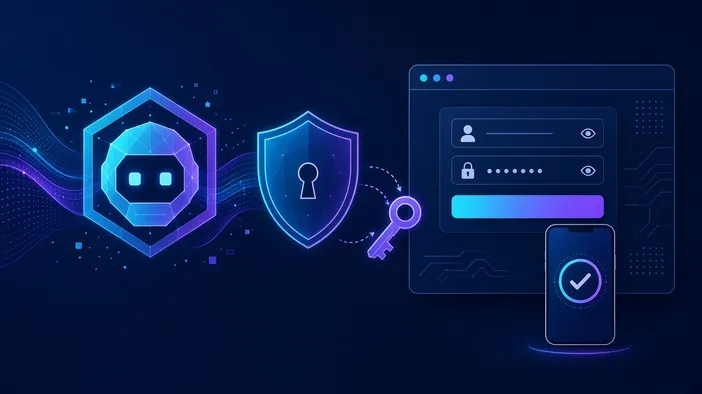
Password manager 1Password has introduced 1Password for Agents. It lets you hand an AI agent a task that requires signing in to a personal account without giving it the password itself. The credentials stay in the vault, and the agent only gets what it needs: a logged-in session.
The launch comes as banks raise alarms. According to Axios, US banks have started spotting AI agent activity inside customer accounts and often cannot tell whether the account owner actually asked for it.
How the sign-in works
When an agent tries to sign in, it presents 1Password with a unique digital key that proves its identity. The user gets a notification about the login attempt and decides whether to allow it.
Once approved, 1Password fills in the login form on the agent's behalf. The assistant carries on with its task inside the account, but the username and password never end up in its memory or logs.
Which agents are supported
At launch you can pick Claude Duet from Anthropic, Dots and ChatGPT Work from OpenAI, Grok Bot, Meta's Muse and assistants from the startup Town. The company says it is talking to other providers about joining.
1Password's main argument is that a password handed to an agent usually gets saved somewhere for next time, and the person loses track of where that copy lives.
Why banks care
Bankers who spoke to Axios called the situation frightening: agent activity in accounts is growing, and there is little to tell a legitimate customer request from someone else's interference. Chase reminds customers never to share their username and password with anyone.
Our take
The idea is sound: an agent needs permission for a specific action, not a password, and a human should be the one granting it. People who build websites and bots should expect login forms to be filled in by software more and more often, and plan for separate, limited-scope tokens for agents. Source: TechCrunch.